BROKERS
How to Start a Freight Brokerage in 2026: Complete Step-by-Step Guide
Starting a freight brokerage has never been more accessible - or more competitive. While the legal process of becoming a freight broker is relatively straightforward, building a profitable brokerage requires much more than obtaining an FMCSA authority.
Today's freight brokers are expected to find reliable carriers, communicate with shippers in real time, prevent fraud, and provide shipment visibility that customers increasingly expect as standard.
This guide walks through every step of starting a freight brokerage in 2026, from registering your business to booking your first load and scaling your operation.
What Is a Freight Brokerage?
A freight brokerage connects shippers that need freight moved with carriers that have available trucks.
Unlike trucking companies, freight brokers don't own trucks or employ drivers. Their job is to coordinate transportation, negotiate rates, solve problems, and ensure freight arrives safely and on time.
A successful freight broker creates value by:
Finding reliable carriers
Negotiating competitive rates
Managing shipment communication
Solving transportation issues quickly
Keeping customers informed throughout the shipment
Learn How the Freight Brokerage Business Works
Before applying for authority, it's important to understand the daily responsibilities of a freight broker.
Your work will include:
Finding shipping opportunities
Managing customer expectations
Processing invoices and payments
Many new brokers underestimate how much time is spent communicating with both shippers and carriers.
Registering Your Freight Brokerage
The first step is creating your business entity. Most new brokerages choose an LLC because it provides liability protection while remaining relatively simple to manage. Others may eventually elect S-Corporation taxation depending on their accountant's recommendations.
After forming your business, you'll need to obtain an Employer Identification Number (EIN) from the IRS before moving forward with federal registrations.
Getting Your FMCSA Broker Authority
To legally operate as a freight broker in the United States, you'll need broker authority from the Federal Motor Carrier Safety Administration (FMCSA).
This process includes applying for your broker authority, obtaining the required $75,000 surety bond or trust fund, designating a process agent, and completing the remaining FMCSA registration requirements.
Once approved, your brokerage can legally arrange transportation between shippers and authorized motor carriers.
Opening Business Banking and Insurance
Keeping business finances separate from personal accounts is essential from day one. A dedicated business bank account makes accounting easier and builds credibility with customers and financial institutions.
Many new brokerages also purchase additional business insurance, such as general liability or cyber liability coverage, depending on their operations and customer requirements.
Building Your Carrier Network
Your brokerage is only as strong as the carriers you work with.
Instead of focusing on collecting thousands of carrier contacts, concentrate on building relationships with reliable carriers that communicate well, deliver consistently, and maintain strong safety records.
As your reputation grows, your carrier network will naturally expand through referrals and repeat business.
Finding Your First Customers
One of the biggest challenges for every new brokerage is acquiring shippers.
Many successful brokerages begin by specializing in a specific industry, freight type, or geographic region. Instead of trying to move every type of freight, becoming known for solving one particular transportation problem often leads to faster growth.
Consistency matters more than volume. Regular outreach, relationship building, referrals, and excellent service generate far more long-term business than constantly chasing one-time loads.
Investing in the Right Technology
Modern freight brokerages rely heavily on technology to compete.
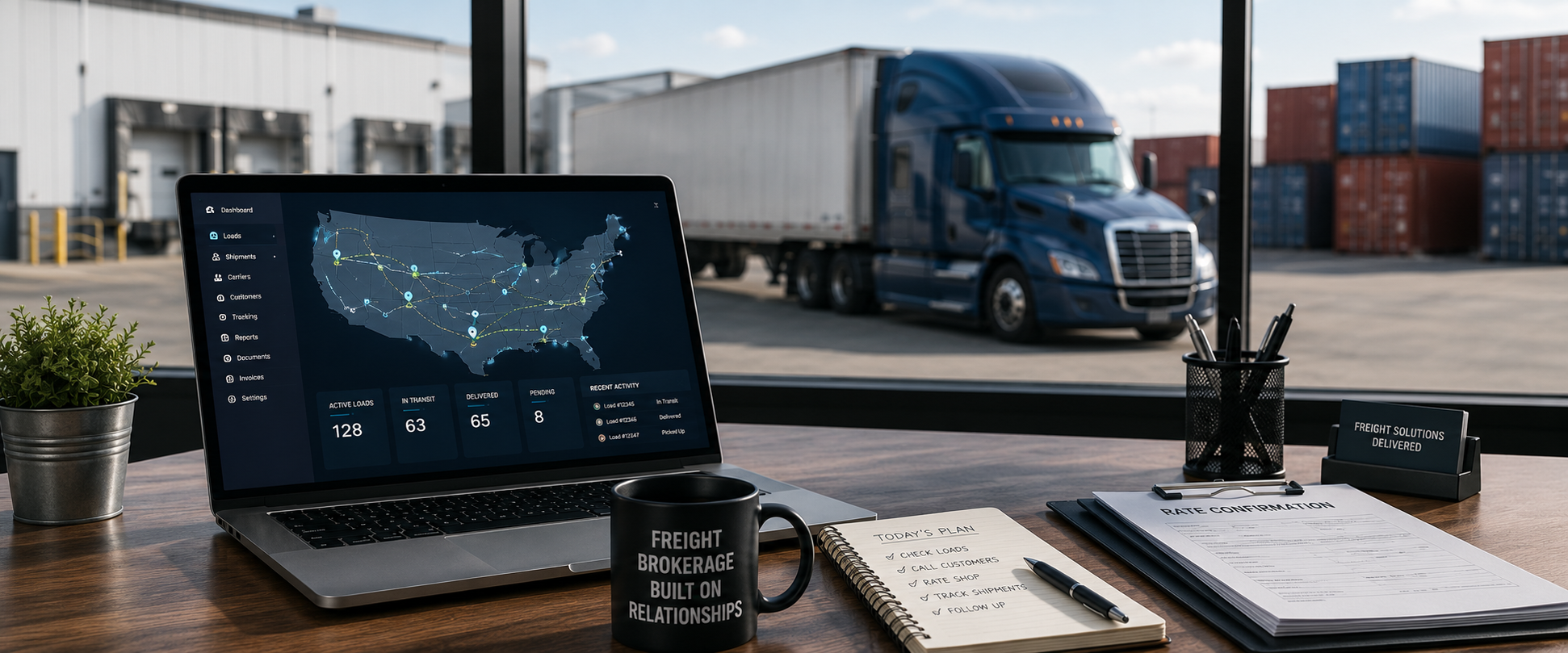
A Transportation Management System (TMS) helps organize loads, customers, carriers, and invoices, while digital document management eliminates countless hours of manual work.
Shipment visibility has become equally important. Shippers increasingly expect to know exactly where their freight is without calling their broker several times a day.
Real-time shipment tracking reduces check calls, improves customer satisfaction, and allows brokers to identify potential delays before they become larger problems.
Delivering Outstanding Customer Service
The fastest-growing brokerages aren't always the ones offering the lowest rates.
Customers remember brokers who communicate clearly, solve problems quickly, and keep them informed throughout the shipment. Fast responses, proactive updates, and transparency often become your biggest competitive advantages.
When customers trust your communication, they continue sending freight-even when market conditions change.
Growing Beyond Your First Year
After your brokerage establishes a steady customer base, growth becomes much more predictable.
Many brokers expand by hiring additional sales representatives, adding carrier sales specialists, automating repetitive tasks, and investing in better operational software. As shipment volume increases, efficiency becomes just as important as sales.
The brokerages that scale successfully are typically those that build standardized processes early rather than relying entirely on manual work.
Final Thoughts
Starting a freight brokerage in 2026 requires more than obtaining operating authority. Long-term success comes from building strong carrier relationships, earning shipper trust, adopting modern technology, and delivering exceptional customer service on every shipment.
The transportation industry continues to evolve, but businesses that provide reliable communication, shipment visibility, and operational efficiency remain in high demand.
If you're starting a new freight brokerage, investing in the right systems from the beginning will save countless hours as your business grows-and position your company to compete with much larger brokerages.